Stress shows up in the body before it shows up in the mind. You might notice your jaw tighten, your shoulders rise, or your breath become short and shallow. These physical changes happen automatically when your body senses a threat, whether that threat is a deadline, a difficult conversation, or just the steady pressure of too many things to do.
Breathing meditation works because it interrupts this physical stress response at its source. Instead of trying to think your way out of stress, you change the rhythm of your breath. That change sends a direct signal to your nervous system that it is safe to relax. This article explains how breathing meditation reduces stress, walks you through several specific techniques, and shows you how to build a practice that breathing meditation for stress relief.
Why Breathing Meditation Works for Stress?
Your body has two branches of the nervous system that manage how you respond to the world. One branch handles the fight-or-flight response. It speeds up your heart, tightens your muscles, and prepares you to react to danger. The other branch handles rest and recovery. It slows your heart, supports digestion, and helps your body repair itself .
When you are stressed, the fight-or-flight branch takes over. This is useful if you need to escape real danger, but it becomes a problem when it stays active for hours or days. Chronic stress keeps your body in a state of alertness that wears you down. You may feel anxious, have trouble sleeping, or struggle to concentrate .
Breathing meditation flips this switch. Slow, controlled breathing activates the rest-and-recovery branch of your nervous system . The vagus nerve, which runs from your brain down through your abdomen, plays a key role here. When you breathe slowly and deeply, you stimulate this nerve, which then signals your heart to slow down and your muscles to release tension .
This is not just a feeling. Research shows that slow breathing can lower cortisol, the body's main stress hormone, and increase heart rate variability, a marker of a healthy, adaptable nervous system . One study found that after a single 20-minute breathing session, cortisol levels dropped by nearly 35 percent in young adults .
The practical takeaway is simple: you cannot always control what stresses you, but you can control how you breathe. And changing your breath changes how your body responds to stress.
Read Also: Easy Yoga Flow For Busy Mornings
The Core Skill: Diaphragmatic Breathing
Before you learn any specific technique, it helps to understand the foundation of all breathing meditation: diaphragmatic breathing. This is sometimes called belly breathing, and it is the opposite of the shallow chest breathing most people default to when they are stressed .
When you breathe from your chest, only the upper part of your lungs fills with air. Your breath is quick and shallow. Your body interprets this as a sign of danger, which keeps your stress response active. When you breathe from your diaphragm, the large muscle below your lungs, you fill more of your lungs and take in more oxygen. Your body reads this as a sign of safety .
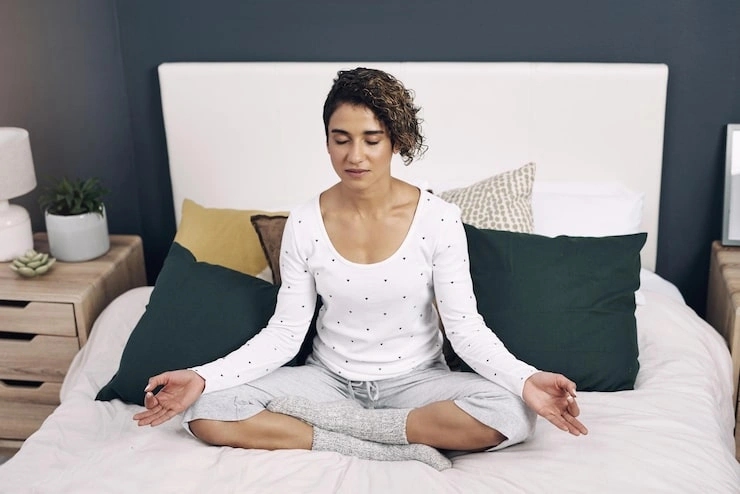
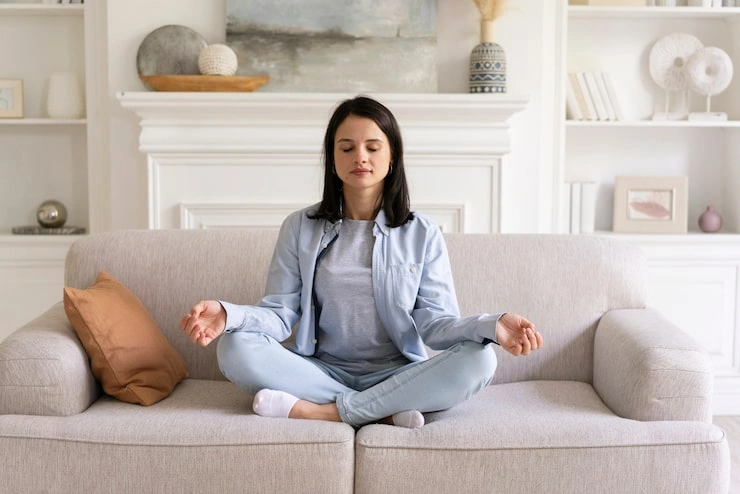
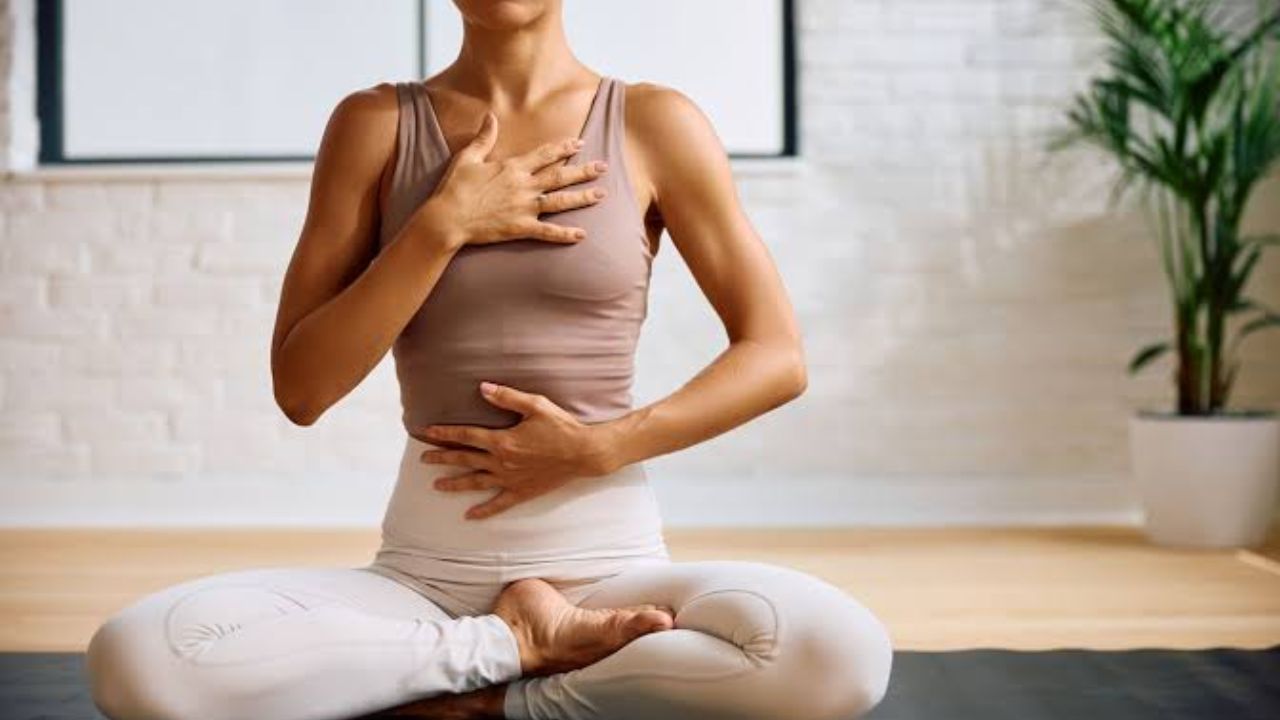
Here is how to practice it. Sit comfortably with your back straight, or lie down on a flat surface. Place one hand on your chest and the other on your belly. Breathe in slowly through your nose. The hand on your belly should rise. The hand on your chest should stay mostly still. Exhale through your mouth, letting your belly fall as you push the air out .
If you have trouble feeling your diaphragm move, try lying down and placing a small book on your stomach. Breathe so the book rises when you inhale and falls when you exhale. This gives you something to focus on and helps you feel the movement .
Most people need a few tries to get comfortable with belly breathing, especially if they have been chest breathing for years. That is normal. The goal is not perfection. The goal is to give your body a clear, physical signal that it can relax.
Three Breathing Techniques You Can Use Today
Once you understand diaphragmatic breathing, you can apply it in specific patterns. Different patterns work better for different situations. Here are three techniques that are widely used and backed by research.
Box Breathing for Acute Stress
Box breathing is used by military personnel, police officers, and athletes to stay calm under pressure . It works by giving your mind a simple structure to follow when everything else feels chaotic.
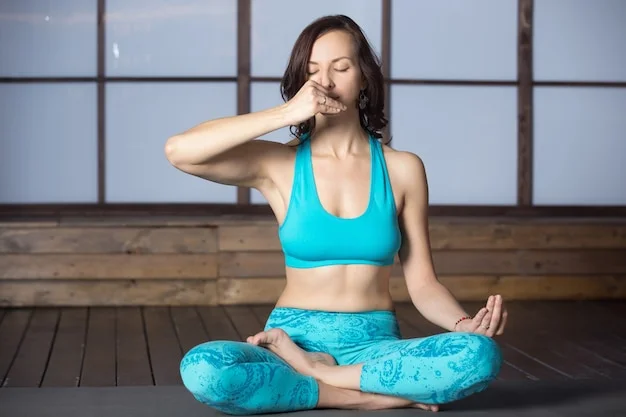
The pattern has four equal parts. Breathe in through your nose for a count of four. Hold your breath for a count of four. Breathe out through your mouth for a count of four. Hold again for a count of four. Then repeat .
You can adjust the count if four seconds feels too long or too short. The important thing is that all four parts stay equal. Start with three seconds if you need to, or work up to five. Practice for five to ten minutes, or just do a few cycles when you need a quick reset .
This technique is especially useful before a presentation, during a tense moment at work, or anytime you feel your stress rising and want to bring it down quickly.
4-7-8 Breathing for Sleep and Deep Relaxation
The 4-7-8 technique was developed by Dr. Andrew Weil, a Harvard-trained physician, based on ancient yoga breathing practices . It is designed to calm your nervous system and prepare your body for rest.
The pattern is simple: breathe in quietly through your nose for four seconds. Hold your breath for seven seconds. Exhale completely through your mouth for eight seconds, making a soft whooshing sound .
The long exhale is the key. When you exhale slowly, you activate the parasympathetic nervous system more strongly than a short exhale would. This helps your heart rate slow and your muscles relax .
Place the tip of your tongue against the ridge behind your upper front teeth and keep it there throughout the practice. This helps regulate airflow . Start with four cycles. If you feel lightheaded, shorten the counts to 3-5-6 until your breathing meditation for stress relief.
Many people use this technique in bed to help fall asleep. It interrupts racing thoughts and puts the body into a state of deep relaxation .
Soft Belly Breathing for Ongoing Tension
Soft belly breathing is less structured than the other two techniques. It is about releasing tension in your abdomen and letting your breath become slow and gentle.
Start by noticing where you hold tension in your belly. When you are stressed, your abdominal muscles often tighten without you realizing it. This is part of the fight-or-flight response. Softening these muscles sends a signal to your brain that the threat has passed .
Sit or lie down comfortably. Take a slow breath in through your nose, letting your belly expand. As you exhale, let your belly soften and fall. Do not force the breath. Just let it be slow, quiet, and regular. Continue for five minutes or longer .
This technique is useful for general stress relief throughout the day. It is also helpful for people who carry tension in their gut or experience stress-related digestive discomfort .
How to Build a Breathing Practice That Lasts?
Knowing the techniques is one thing. Actually using them when you are stressed is another. The key is to practice when you are calm so the skill is available when you need it.
Start small. Even one minute of conscious breathing is worth doing. You do not need to set aside thirty minutes. You can practice box breathing while waiting for your coffee to brew or 4-7-8 breathing for a few cycles before you get out of bed .
Attach it to something you already do. This is called habit stacking. If you brush your teeth every morning, practice breathing for one minute right after. If you sit down at your desk at work, take three slow breaths before you open your email. Linking the new habit to an existing one makes it easier to remember .
Use transitions. The moments between activities are natural opportunities for a reset. When you move from your car to your house, or from one meeting to the next, take a few conscious breaths. These small pauses add up .
Be patient with wandering thoughts. Your mind will drift. That is not a failure. When you notice you are thinking about something else, simply bring your attention back to the breath. You might say to yourself, "thinking," and then return to the sensation of breathing . The practice is not about stopping thoughts. It is about noticing when you have drifted and gently coming back.
Practice before you need it. If you only breathe consciously when you are already overwhelmed, it will be harder to focus. Regular practice, even just a few minutes a day, trains your body to relax more quickly when you actually need it .
You May Also Like: Meditation Routine Before Bedtime For Adults
What Breathing Meditation Can and Cannot Do?
Breathing meditation is a powerful tool, but it is not a cure for everything. It is worth being clear about what it can help with and what it cannot.
Breathing meditation can reduce feelings of stress and anxiety in the moment. It can help you fall asleep more easily. It can lower your heart rate and blood pressure temporarily. It can give you a sense of control over your body when everything else feels out of control .
What it cannot do is replace professional care for serious conditions. If you have persistent anxiety, depression, or post-traumatic stress disorder, breathing exercises can support your treatment, but they are not a substitute for therapy or medication . If you are experiencing severe stress that interferes with your daily life, talk to a doctor or mental health professional.
It is also worth noting that breathing exercises can occasionally cause lightheadedness or tingling, especially if you breathe too quickly or too deeply without guidance. If that happens, return to your normal breathing and let the sensation pass. If it does not pass, stop the exercise .
Making It Part of Your Life
The best breathing practice is the one you actually do. You do not need special equipment or a quiet room or thirty minutes of free time. You need a few minutes and a willingness to pay attention to something you do every moment of every day anyway.
Start with one technique. Try box breathing when you feel stressed. Try 4-7-8 before bed. Try soft belly breathing when you notice tension in your body. See which one feels most natural to you.
Then practice it. Not perfectly. Not every day. Just often enough that your body learns what it feels like to relax on purpose. Over time, that skill becomes easier to access. The breath is always there. The more you use it, the more it becomes a reliable source of calm in a world that rarely slows down.